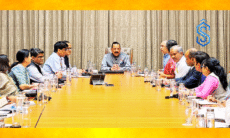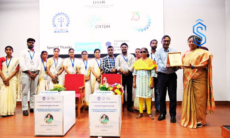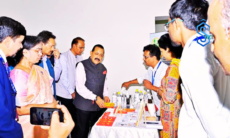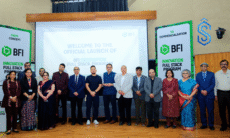

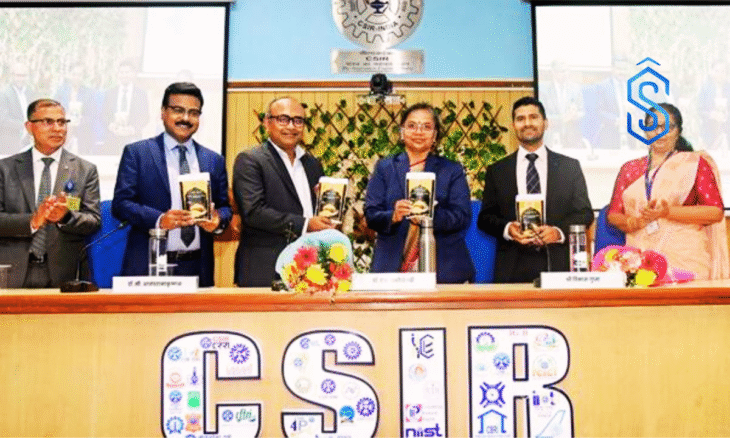
New Delhi: The CSIR NIIST Tech Connect event marked a significant milestone in India’s technology translation ecosystem as the CSIR–National Institute for Interdisciplinary Science and Technology (CSIR–NIIST), Thiruvananthapuram, organised “CSIR NIIST Tech Connect: Lab to Market” at the CSIR Headquarters in New Delhi.
The programme witnessed the transfer of 11 technologies and the signing of one Memorandum of Understanding (MoU), reinforcing CSIR’s commitment to bridging laboratories and industry through structured innovation pipelines.
Addressing the gathering at CSIR NIIST Tech Connect, Secretary, Department of Scientific and Industrial Research (DSIR) and Director General, CSIR, N Kalaiselvi, emphasised the need to transition from conventional R&D to “R&D Innovation.”
She stated that research must begin with market needs and move backward to design impactful solutions.
She underlined that institutions must focus not only on knowledge generation but also on translation, validation, scalability, and commercialization to ensure tangible societal benefit.
Also Read: Dr Premnath Venugopalan Calls for Purpose-Driven Technology Transfer Frameworks
Strengthening Industry Synergy
Highlighting growing collaboration between CSIR laboratories and industry, Dr. N. Kalaiselvi noted at CSIR NIIST Tech Connect that technology transfer has evolved into a core institutional mandate aligned with national priorities such as self-reliance, sustainability, and nutrition security.
She lauded CSIR–NIIST’s expanding innovation ecosystem, particularly its interdisciplinary focus on biosciences, bioengineering, Ayurveda research, artificial intelligence, and sustainable materials.
The DG also highlighted the establishment of the CSIR–NIIST Innovation, Technology and Entrepreneurship Hub, designed to promote startups, SMEs, and industry partnerships in areas including sustainable packaging, spice incubation, coir and rubber technologies, and green hydrogen-enabled bio-manufacturing.
She further noted that strengthening external cash flow, increasing non-governmental revenue streams, and scaling up technology transfer volumes reflect a strategic shift toward translational research and commercialization-driven growth – an objective reinforced during CSIR-NIIST Tech Connect.
CSIR NIIST Tech Connect: Key Technologies Transferred
A major highlight of CSIR NIIST Tech Connect was the transfer of a high-protein, low glycaemic index rice enriched with micronutrients such as iron, folic acid, and Vitamin B12.
Developed to address anaemia and diabetes concerns, the rice varieties demonstrated enhanced protein content and reduced glycaemic index while retaining cooking and sensory properties.
Another significant transfer included a novel instant coffee foam technology capable of sustaining foam at high temperatures without milk addition.
Additionally, a low-sodium salt technology with substantial sodium reduction was introduced. An MoU was signed for further collaborative research and scale-up of this technology.
Also Read: Technology Development Fund: DRDO Hands Over Seven Key Technologies to Armed Forces
Other technologies transferred during CSIR NIIST Tech Connect included:
- Cardanol polyol-based polyurethane dispersions
- Osmotic dehydration processes
- Ready-to-cook vegetable mixes
- Fruit roll technologies
- Composting bio medium (JAIVAM)
- Vegan leather
“Festival of Technology Transfers”
In his address, Director, CSIR–NIIST, Thiruvananthapuram, C. Anandharamakrishnan, described CSIR–NIIST Tech Connect as a “festival of technology transfers.” He said the event reflected the institute’s strategic decision to expand its national footprint and enhance industry visibility.
He highlighted significant institutional performance indicators, including a sharp rise in external revenue generation, technology transfer volumes, industry projects, CSR projects, and research output.
Dr C Anandharamakrishnan explained that CSIR–NIIST consciously shifted its approach from traditional R&D to R&D innovation, where product design is guided by market demand and technologies are refined continuously post-transfer.
He elaborated on the development journey behind protein-enriched rice, foam-stabilised instant coffee, and sodium-reduced salt, emphasising the importance of industry collaboration in scaling laboratory breakthroughs – an approach showcased at CSIR–NIIST Tech Connect.
NRDC Highlights Expanded Commercialization Role
Chairman & Managing Director, National Research Development Corporation (NRDC), Amit Rastogi (Retd), highlighted the renewed synergy between CSIR and NRDC during CSIR NIIST Tech Connect. He stated that over the past two years, NRDC has commercialised a substantial number of CSIR technologies and generated significant royalty and premium revenue.
He outlined NRDC’s expanded mandate beyond conventional licensing, including:
- Creation of incubation infrastructure
- Technology readiness level assessment (NETRA)
- Design clinics
- System engineering support
- Financial assistance up to ₹1 crore for technology development
- Seed funding support
- IP facilitation
He also shared plans for establishing a National Technology Translation Organization and launching an AI-enabled technology exchange platform to improve visibility and conversion of research outputs into market-ready products.